You preserve your Rochester Hills residence by hiring tree removal and landscaping specialists who can recognize decay, structural cracks, critical lean, root damage, and canopy risks before failure occurs. They'll assess whether pruning can repair localized defects or whether controlled removal is the preferred option. They can manage grading, drainage, soil compaction, stump treatment, and replacement planting after removal to recover function and curb appeal. Proceed below to discover when each service provides the most sense.
Key Highlights
- Rochester Hills tree professionals evaluate cracks, decay, leaning, and root damage to determine whether trimming or full removal is best.
- Professional removal secures roofs, siding, foundations, driveways, and utility lines by clearing dangerous limbs, trunks, and invasive roots.
- Certified arborists apply safe, controlled techniques, including rigging or sectional dismantling, with documented safety zones and suitable equipment inspections.
- Landscaping coordination upon removal covers grading, soil aeration, stump grinding, drainage correction, and replacement planting adapted to site conditions.
- Choose insured, safety-compliant professionals with local climate expertise, written scopes, and arborist guidance on timing, species, and property protection.
Do You Benefit From Tree Extraction or Cutting?
You assess if a tree calls for clearing versus cutting by examining structure, room, species development characteristics, and site circumstances. Trimming handles canopy compactness, enhances limb placement, minimizes end weight, and keeps proper separation from roofs, walks, driveways, and utility lines. This procedure is vital for seasonal cutting, fostering strong growth cycles while lessening mechanical stress.
Plan trimming when branches block visibility, encroach on buildings, or cause extreme wind resistance. A certified arborist will assess branch unions, load spread, and cutting limits to avoid cuts from weakening the tree. Pruning assists storm readiness by reducing sail effect and eliminating unstable limbs before extreme weather strikes. When retention is practical, targeted shaping gives a better, more regulated, and more budget-conscious option for your landscape altogether.
What Warning Signs Mean a Tree Should Be Removed?
If you notice obvious structural issues like large cracks, split trunks, or significant snapped limbs, you should schedule a professional assessment. You must not dismiss significant rot, which includes cavity sections, fungal growth, or crumbling, decaying wood, since these flaws can show critical loss of structural soundness. If the tree displays hazardous slanted growth—especially a recent shift or revealed roots—it may create an urgent collapse hazard and should come down.
Observable Structural Damage
Visible structural defects in a tree means it can collapse without sufficient warning and create a significant public safety hazard. Examine the trunk for extended lengthwise splits, exposed seams, surface bark loss, and significant cavities. Check whether primary limbs have cracked attachments, suspended sections, or severe bends from storm loading. Unexpected angling, particularly with exposed roots or elevated soil, shows structural instability. Subsurface root pressure near structures can cause masonry cracks and foundation heaving, indicating movement that needs immediate evaluation.
You should also monitor codominant stems with trapped bark, because that weakened union can separate under wind or snow load. If multiple serious defect appears at once, risk escalates fast. Until a professional arborist evaluates the tree immediately, keep people, vehicles, and equipment outside the drop zone.
Advanced Tree Decay
Since interior decay can hollow a tree long before the canopy shows decline, you should regard fungal conks, mushrooms at the root flare, spongy or friable wood, and expanding cavities as serious indicators. These indicators often suggest structural fibers have already been damaged deep within the trunk or buttress roots, diminishing load-bearing capacity under typical wind and snow conditions.
You should also watch for seams, collapsed bark, necrotic tissue around old wounds, and dust-like frass that suggests additional insect activity. Fungal fruiting bodies don't always appear annually, so even intermittent growth can signal persistent decay columns. Removal may be the wisest option if probing reveals soft wood or cavities exceed a third of trunk diameter. A qualified arborist can assess the extent of internal decay and associated failure risk quickly.
Perilous Leaning Growth
A noticeable slant typically indicates a structural concern, especially if the incline has increased in recent months or the soil near the base exhibits shifting, fracturing, or visible roots on the side counter to the lean.
You should further assess the trunk flare and below-ground zone for root girdling, damaged support roots, deterioration pockets, or drenched soil that decreases load-bearing capacity. Leaning can worsen after storms, excavation, or grade changes. Some introduced trees create poor attachment points or shallow root systems, increasing failure risk under wind stress. If you detect canopy thinning on one side, splitting bark, or new soil movement, book a certified arborist assessment immediately. Removal may be the safest option when support defects compromise stability and target areas.
When Is Tree Trimming the Superior Option?
While entire extraction may be needed in some cases, trimming is the preferred choice when the tree has a healthy trunk, firm roots, and problems restricted to specific branches or excessive areas. You should choose trimming when inspections reveal sound structural wood, viable branch unions, and no significant basal decay. Targeted pruning lowers end-weight, eliminates deadwood, and returns branch spacing while keeping canopy stability.
Crown cleaning will help you when diseased, cracked, or rubbing limbs generate targeted hazards. Seasonal timing matters because pruning during dormancy or species-appropriate windows minimizes stress, boosts wound response, and minimizes pest pressure. A qualified arborist will analyze load distribution, cut back to proper lateral branches, and avoid topping. That approach maintains tree function, maintains clearance, and lowers failure risk while keeping a valuable, healthy tree in place.
How Can Tree Removal Safeguard Your House?
Often, tree removal shields your residence by eradicating risk points that can impact the roofing, siding, windows, or foundation during wind, ice, or wet-soil events. If a trunk tilts, roots lift hardscapes, or decay weakens structural wood, you face mounting structural risk. Removing the tree also decreases limb drop over service lines, driveways, and entryways.
You also decrease moisture problems. Dense canopy cover can retain humidity against roofing and siding, while invasive roots can interfere with drainage patterns near the foundation. By resolving those hazards, you minimize the probability of water intrusion, settlement, and emergency repairs. Strategic removal can conserve healthier nearby trees and ensure safer clearance from structures. When possible, you should weigh risk reduction with wildlife habitat goals and document hazards for storm insurance claims and future property planning.
What Happens During Tree Removal?
Before cutting begins, the crew protects the work zone, checks utility locations, and examines the tree's lean, load, decay, and drop path so they can choose the safest removal approach. Barricades, rigging lines, and protective equipment are set up before ascending or cutting begins.
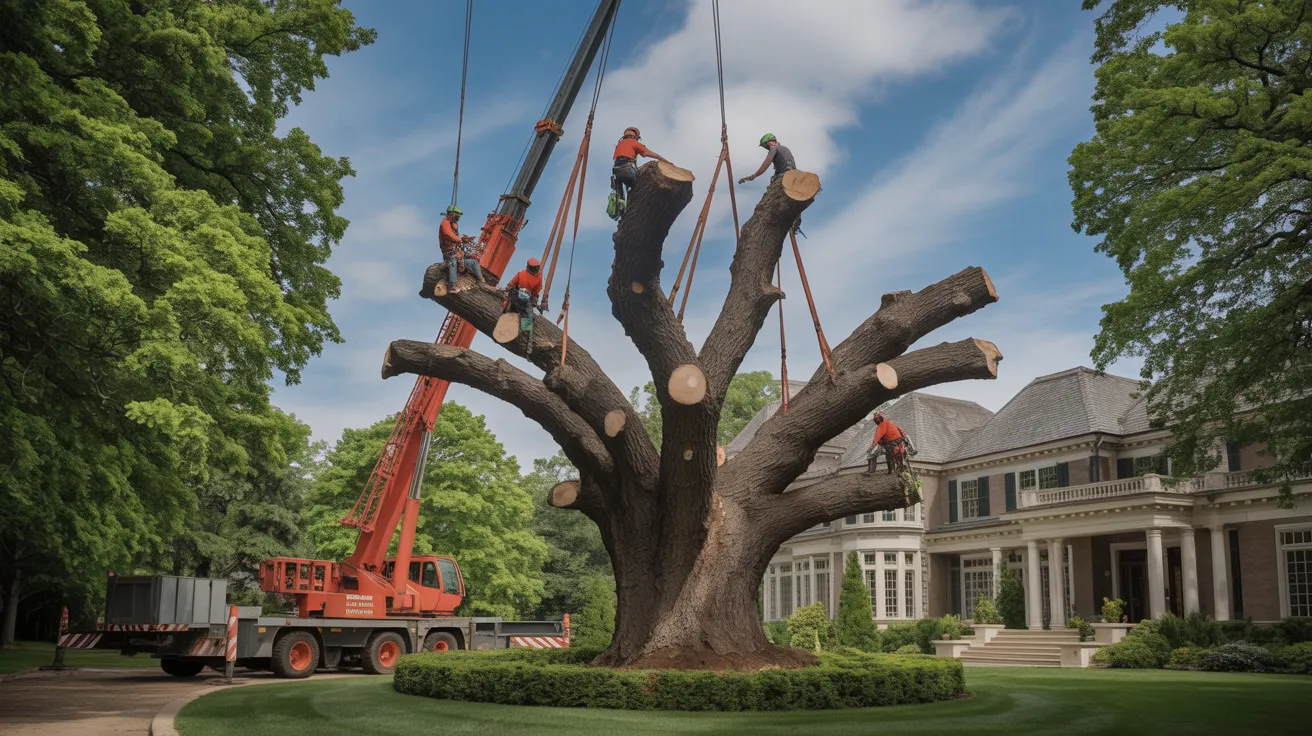
If space is available, they may bring down the tree in one directed direction. In confined areas, you can expect sectional dismantling, where limbs and trunk sections are brought down with ropes or a crane to stop impact damage. In emergency removal scenarios, crews focus on immediate hazards, secure compromised sections, and clear access routes quickly. After the trunk is down, they cut remaining wood to grade, haul away debris, and check for hangers or hidden tension. Stump grinding comes next to remove the remaining stump and major surface roots safely if requested.
How Do Tree Removal and Landscaping Work with Each Other?
In real-world application, tree removal and landscaping function as one unified process because every cut impacts grade exposure, sunlight, drainage, root competition, and usable space across your property. Before placing turf, beds, or hardscape, you must examine stump depth, disturbed soil, and debris routes.
After removal, you regrade to control runoff, address compaction, and protect foundations. You might need soil aeration to restore oxygen exchange and enhance water infiltration in locations where equipment traveled. You should map essential root zones and add root barriers to reduce future conflict with walks, patios, and planting areas if adjacent trees remain. You also match replacement plants to new light levels generated by canopy loss. Proper sequencing of removal, cleanup, grading, and planting decreases trip hazards, erosion, settlement, and preventable damage to underground utilities and irrigation lines.
Why Bring In Rochester Hills Landscaping Authorities?
When you partner with Rochester Hills landscaping professionals, you get crews who grasp native soil properties, drainage layouts, and climate-related stress variables that determine sustained landscape health. They use the appropriate equipment for grading, tree work, and material processing, which limits site damage and boosts installation precision. You also protect your property and the persons on it, because experienced specialists follow proper project execution practices from planning through cleanup.
Area Weather Expertise
Since Rochester Hills weather cycles through freeze-thaw cycles and spring saturation to summer elevated temperatures and severe weather loads, your landscape needs species selection, grading, drainage, and tree risk assessment aligned with local site conditions. You gain advantage when local specialists apply microclimate mapping to determine exposure, slope, soil moisture, salt effect, and frost pockets across your property.
That knowledge enables you to pick plants with appropriate frost resistance ratings, root-zone tolerances, and wind resistance. Additionally, you obtain drainage fixes that reduce heaving, runoff concentration, and wet soils that destabilize trees. Local crews identify storm-prone canopies, codominant stems, girdling roots, and pest stress quickly, before failure risk increases. Through climate-specific planning, you can preserve structures, preserve plant health, and decrease avoidable hazards during every season on your site.
Equipment Use Guidelines
While landscaping may appear simple, correct equipment operation directly influences safety, efficiency, and the level of results on your Rochester Hills property.
You further gain from stringent equipment safety procedures and routine machinery maintenance. Technicians evaluate blades, hydraulic lines, guards, tires, and fuel systems ahead of beginning work. They calibrate mowers, trimmers, stump grinders, and compact loaders for precise functionality and cleaner results. If your project needs specific attachments, they recognize the load limits, operating tolerances, and manufacturer specifications. This technical understanding helps protect your landscape property investment while keeping every tool functions at peak performance.
Dependable Project Execution
Safe project execution for landscaping jobs that involve numerous moving parts relies on disciplined planning, danger control, and trained field supervision. Hiring Rochester Hills landscaping specialists minimizes your exposure to avoidable risks that can compromise property, delay schedules, or hurt workers. Specialists examine grade, utilities, overhead clearance, soil conditions, and equipment access before work begins.
Established safety protocols are implemented, exclusion zones are set up, and tasks are sequenced to regulate traffic, falling debris, and tool interactions. You gain from crew training that encompasses machine operation, rigging, lifting technique, PPE compliance, and emergency response. Supervisors monitor shifting site conditions, halt unsafe acts, and modify methods as needed. This systematic approach ensures your project compliant, effective, and incident-resistant while protecting structures, plant material, and all workers on site throughout each work phase.
Which Landscaping Enhancements Enhance Curb Appeal?
Begin with improvements that increase visual arrangement, plant health, and visibility from the street. You should prune overgrown shrubs, clear deadwood, and elevate lower tree limbs to enhance pedestrian and motorist visibility. Plant Native plants matched to Rochester Hills soils and drainage; they take root faster, demand less irrigation, and minimize pest pressure. A Mulch update stabilizes soil moisture, suppresses weeds, and outlines bed edges, but keep mulch away from trunks to prevent decay.
Next, address grading near walks and foundations, then edge beds carefully to create crisp borders. Repair damaged pavers, smooth trip hazards, and install low-voltage lighting to illuminate entries, steps, and address numbers. You'll also enhance curb appeal by screening utility boxes, refinishing faded fences, and preserving turf density through overseeding, aeration, and calibrated fertilization schedules.
How Can You Choose a Rochester Hills Tree Pro?
What's the proper method to find a Rochester Hills tree pro who eliminates unnecessary risk to your property? Initially validate licensing, liability insurance, and workers' compensation. Ask for proof, not assurances. Verify the workers observes ANSI Z133 safety standards, utilizes certified arborists when diagnosis is necessary, and records site-specific hazards in advance of work commences.
You should also check whether the company understands local ordinances, utility clearance requirements, and permit triggers for protected trees. Require a written scope that details rigging methods, debris control, stump handling, and traffic protection. Check recent references for punctuality, cleanup, and incident history. If storm damage is possible, make sure the company provides 24/7 response protocols and clear emergency contacts. A qualified pro explains risk controls, protects the work zone, and guarantees you have no unanswered safety questions before cutting begins.
What's the Best Way to Plan Your Next Yard Project?
First defining your project goals, including scope, site constraints, and any tree or landscape hazards that could influence work methods. Following this, set a realistic budget that accounts for labor, materials, equipment access, permits, and contingency costs for safety-related issues. When you create clear objectives and accurate cost limits, you'll minimize project risk and strengthen execution.
Define Job Goals
Define the job's scope before any tree cutting, grading, or planting commences, because precise goals reduce safety risks, control costs, and prevent design conflicts. Identify exactly what you need addressed: canopy clearance, drainage correction, slope stabilization, privacy screening, or usable outdoor space. A well-defined yard vision allows you organize work correctly and eliminate rework.
Next, note site constraints that affect execution. You should note overhead lines, root zones, drainage paths, easements, septic components, and visibility at driveways. Then establish performance goals, such as erosion control, stormwater flow, shade reduction, or low-maintenance plant coverage. Coordinate each target with your maintenance schedule so the finished landscape stays safe and functional over time. When your objectives are quantifiable and site-specific, contractors can suggest methods, equipment, and planting plans that fit your property safely.
Set A Sensible Spending Plan
When your site work goals are established, establish a budget matching the property conditions, work progression, and hazard level. Break down and cost every job separately: tree removal, stump grinding, grading, drainage correction, soil amendment, planting, and cleanup. Obtain itemized estimates so you can review labor, equipment, disposal, permits, and material costs properly.
Start with local budget helpful resource guidelines as a baseline, then change for entry limits, utility conflicts, diseased trees, hardscape protection, and erosion control requirements. Mobilization, crane use, traffic management, and emergency response fees should not be ignored when safety concerns are identified. Contingency planning should be built into the total, typically ten to twenty percent, because hidden root damage, unstable limbs, buried debris, and weather delays can modify scope fast. A realistic budget ensures safety, schedule, and sustained landscape performance without requiring dangerous shortcuts.
Typical FAQs
What Does Tree Removal Normally Cost in Rochester Hills?
You can anticipate to pay about $300 to $1,500 for tree removal in Rochester Hills, with big, dangerous, or crane-requiring jobs surpassing $2,500. Your normal price copyrights heavily on size factors, including trunk diameter, height, canopy spread, and nearness to properties or power lines. You should also budget for higher costs for emergency service, stump grinding, rigging complexity, and debris hauling. The most protected, most detailed estimate comes from a site inspection.
Do You Need Permits for Tree Removal in Rochester Hills?
Yes, permits may be needed, like Theseus needing Ariadne's thread before entering the maze. You should validate local permit requirements with Rochester Hills, especially if the tree meets criteria as one of the city's heritage trees or sits in a conserved area. You can't think private property frees you. Check zoning, diameter, species, and site conditions first. This step shields utilities, adjacent constructions, and your liability during removal activities.
Does Homeowners Insurance Cover Storm-Damaged Tree Removal?
Storm-damaged tree removal may be covered by your homeowners insurance if the tree impacts a covered building, obstructs vehicle access, or poses a documented safety hazard. Ahead of filing, you'll need to confirm policy limits, insurance deductibles, and coverage exclusions. Removal usually isn't covered if the tree falls without causing covered damage. Document the loss, photograph hazards, prevent further damage safely, and reach out to your insurer promptly for claim instructions.
Can Removed Trees Be Recycled Into Mulch or Firewood?
Removed trees can usually be recycled into mulch or firewood, so you don't need to let usable wood go to waste. First, you'll need proper inspection, because diseased, chemically treated, or pest-infested material shouldn't safely enter mulch production or firewood processing. When the wood is sound, you can chip branches for mulch and cut, split, and season logs for burning. You'll lower disposal volume, enhance site safety, and reclaim value.
What's the Timeline of a Typical Tree Removal Project?
Tree removal projects usually take 2 to 8 hours, though your particular duration depends on tree size, site location, risk factors, and availability for equipment. Expect compact trees to be removed quickly, while large or compromised specimens require sectional takedown and rigging setups. Experienced crews moreover factor in safety checks, limb handling, stump alternatives, and site cleanup. When utilities or cranes become part of the plan, anticipate your timeline to lengthen substantially.
Final Takeaways
As you inspect your outdoor space, treat each tree as a structural feature in a living system. If decay, lean, or dead limbs signal failure, removal lowers risk before gravity writes the worst-case scenario across your roof. For solid trees, precise trimming brings back appropriate clearance, balance, and wellness. Collaborating with Rochester Hills specialists, you don't guess—you engineer more secure solutions. Design your next project with clear priorities, noted dangers, and improvements that make your landscape appear sharp and perform well.